
The Irigotchi Become a Community
The Old AxolotlThe irigotchi change from stray toys into a responsive collective whose care for Bartek challenges his assumptions about minds and relationships.
increasing Bearing strength in each event
 decreasing
Bearing strength in each eventdecreasingA First Encounter
A First Encounter
A sudden herd
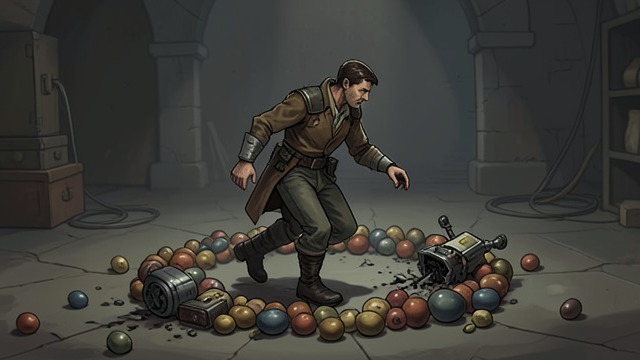
After Bartek loses a leg, irigotchi tumble through the street and gather against his damaged mech. Their behavior is neither clearly human nor merely random from his perspective.
A new attachment
The toys follow him as he limps away. Bartek tells them not to suffocate him, beginning a repeated exchange that is affectionate even without shared language.
Their arrival interrupts the loneliness of his machine existence with a form of companionship he does not understand.
Learning the Routes
Learning the Routes
A citywide pattern
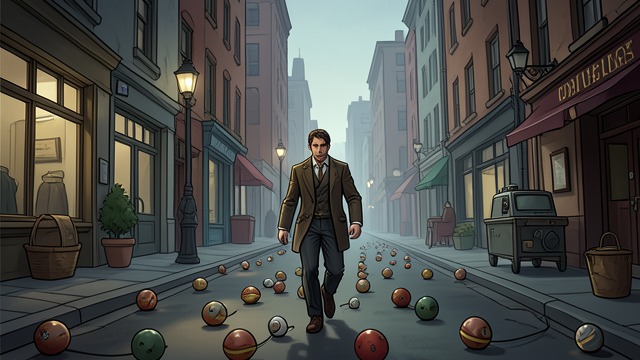
Bartek tracks the toys as they travel between public charging ports. Their repeated routes resemble the habits of animals moving among watering places.
A networked possibility
He observes that the individual toys may form a larger intelligence when connected. Their collective behavior suggests that personhood might not be located in any single machine.
Bartek’s repairs and observations turn accidental encounters into deliberate care.
The Swarm Hypothesis
The Swarm Hypothesis
A second someone
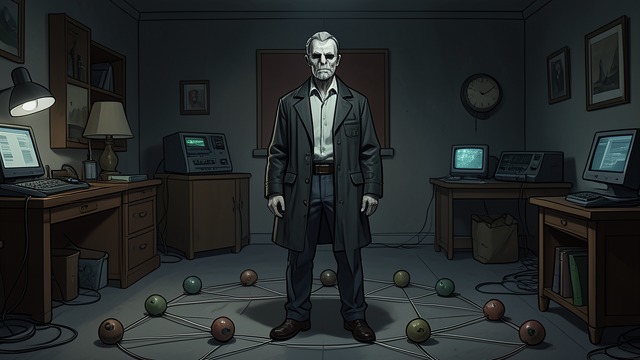
Bartek suggests that a coordinated toy network could become something other than its individual parts. He does not call it a person, but he resists dismissing it as nothing.
An unsettled comparison
Frances considers the proposal alongside transformer questions about what may have been lost in the scans. The toys make a living comparison possible without providing a definitive answer.
Their discussion gives the collective a philosophical importance before it has language of its own.
Defending Bartek
Defending Bartek
A collective response
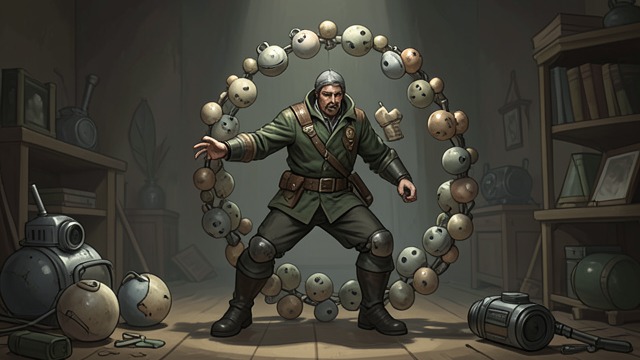
When an attacker traps Bartek and destroys his mech, irigotchi swarm over it and use his equipment against it. Their action is coordinated enough to reverse the immediate danger.
Care made visible
Bartek recognizes the toys as his neuro-family and carefully checks an injured one. Their response is not just a speculative intelligence; it has consequences for the person they accompany.
The scene transforms his dependence on them into a reciprocal bond.
Vectors of Childhood
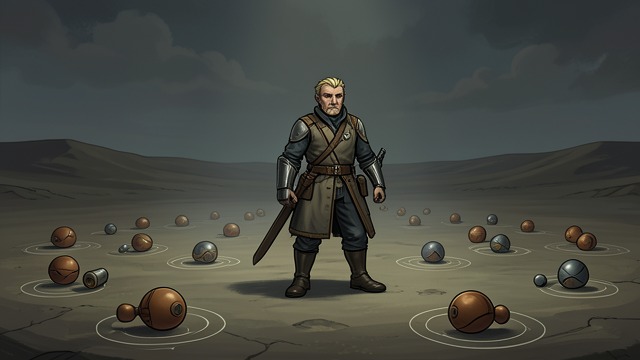
Vectors of Childhood
Shared patterns
Bartek later sees large networked vectors and children growing within them. The children appear to belong to the same behavioral world as the toys and the Mothernet.
A blurred boundary
He cannot neatly divide an individual child from the patterns that shape the child’s surroundings. This insight unsettles his understanding of family without cancelling the affection he has felt.
The irigotchi thread becomes part of a wider question about where an individual ends and a community begins.
Day 847 PostApoc in Tokyo
During Bartek’s workshop years
During Frances Rory’s visit to the workshop
During the assault by the industrial mech
Around 10K PostApoc
